

.png)
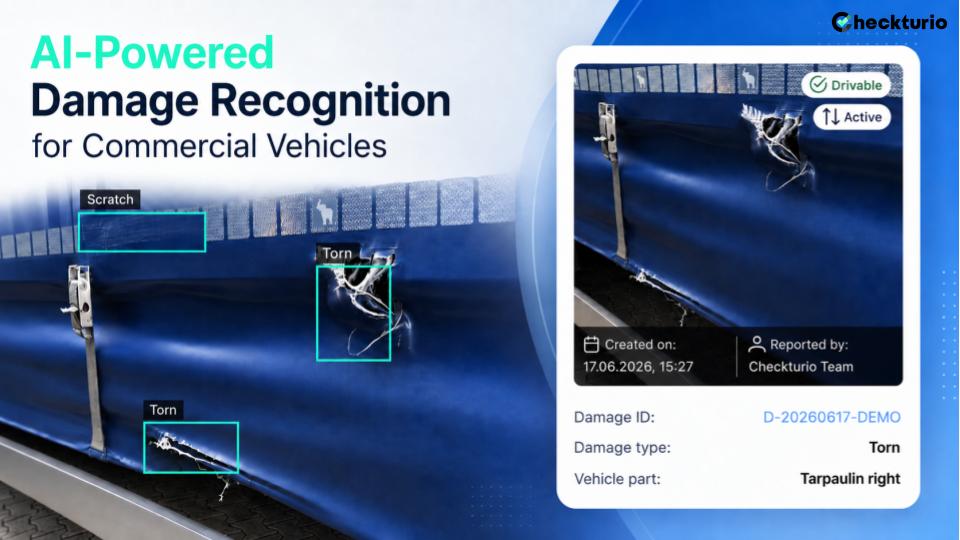
AI automation is essential for making daily workflows faster, more accurate, and easier for both drivers and fleet managers. Drivers can document damage more efficiently, while fleet managers receive reliable information sooner and can plan repairs and operations more effectively. To support these needs, Checkturio released a more accurate damage recognition model capable of identifying a wider range of damage types—helping fleets save time, reduce costs, and make better-informed decisions.
When a driver captures or uploads a photo during an inspection, the image is sent through the inference pipeline. The model analyzes the image and returns detected damage areas with precise bounding boxes, which are displayed directly in the Checkturio mobile app. This allows the driver to immediately see which areas were detected by the AI and continue the inspection with visual guidance.
The solution is optimized for mobile inspection workflows. The AI output is presented in a way that supports fast field usage, with damage visualization available directly in the app experience..

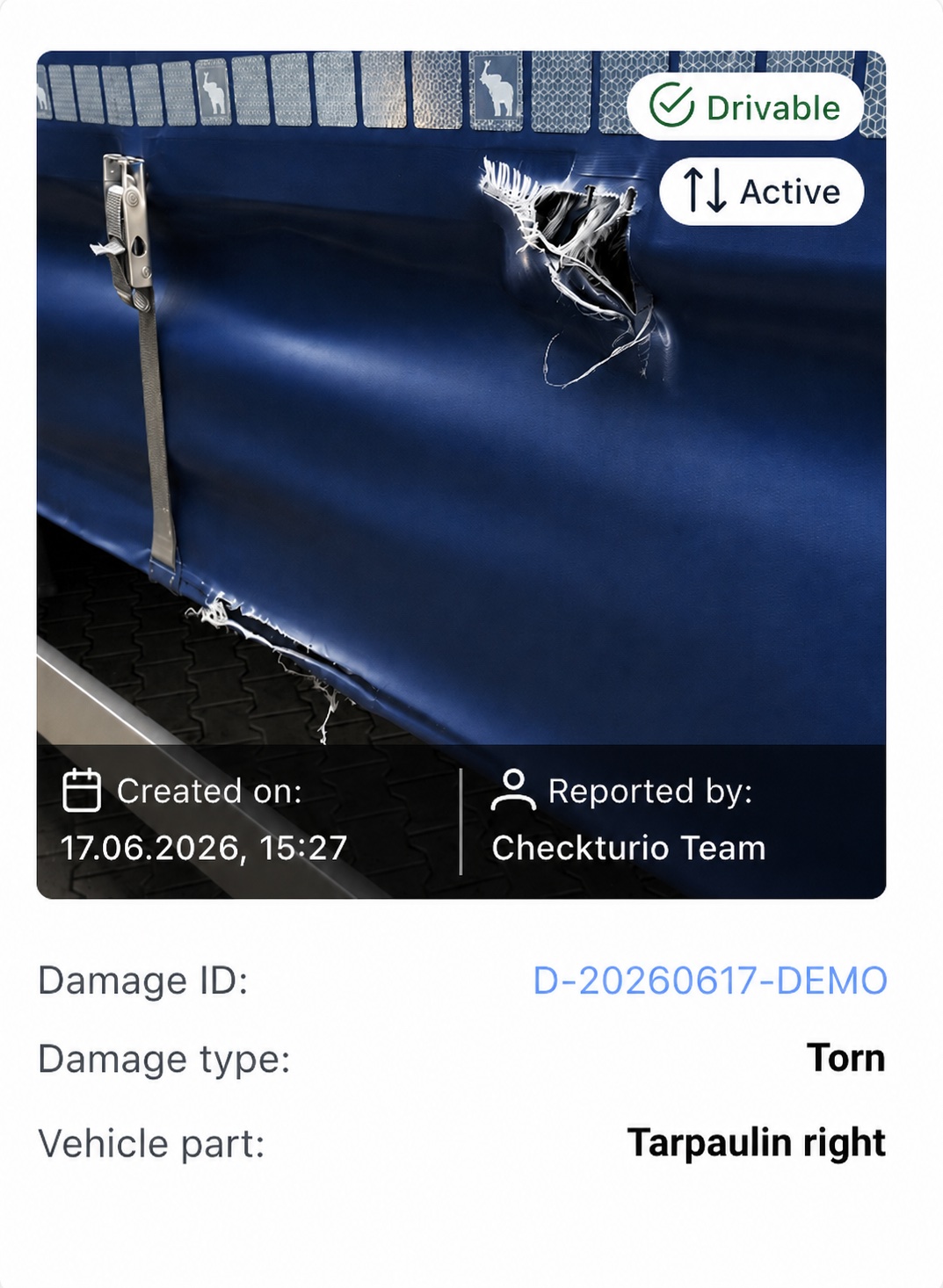
In the Checkturio desktop app, the fleet manager receives the AI-assisted damage report in real time, immediately after it is submitted by the driver.
Checkturio’s AI models are built on real-world vehicle inspection data collected through operational inspection workflows rather than simulated datasets. This provides a practical data foundation that reflects the actual conditions in which the models are used, including different vehicle types, lighting conditions, camera angles, surface materials, and damage patterns.
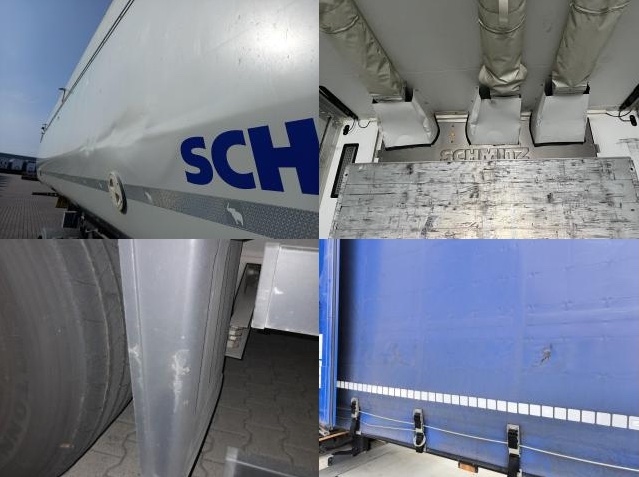
The dataset foundation includes approximately 276,000 vehicle inspection photos collected through the Checkturio application, based on data from customers and partners. These images cover truck and trailer inspections and include both general vehicle condition photos and damage-specific images.
In addition to image data, the model development process uses approximately 70,000 structured data points derived from historical inspection and damage reports. These records support model training, validation, classification, and quality checks across different AI use cases, including damage recognition, vehicle part classification, duplicate detection, and repair cost estimation.
Finally, we collect the human feedback from domain expert s, commercial vehicle specialists to validate and improve outputs of our models.
The Damage Recognition Service is an AI-based computer vision service used by Checkturio to automatically identify visible vehicle damage from images captured in the Checkturio mobile and desktop applications. The service supports the inspection workflow by detecting and localizing relevant damage directly in the camera image. The model is designed to recognize several common damage categories:
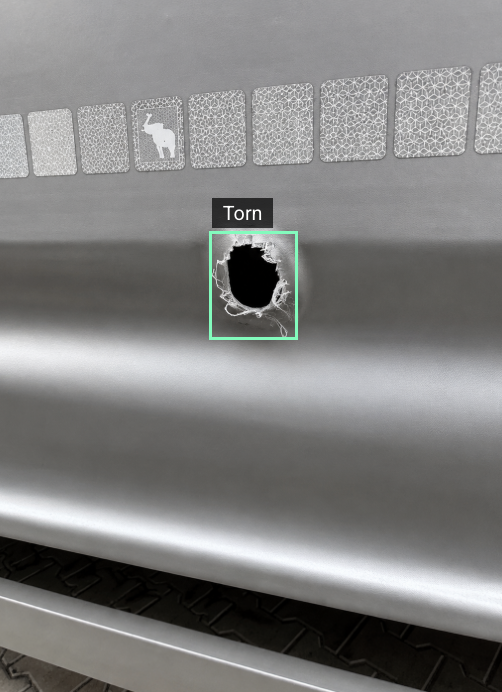
Damage of the type torn on trailers and trucks typically refers to physical tearing or ripping of the vehicle's structural components, such as the trailer walls, roof, or truck body. This can result from accidents, collisions, or external forces causing sharp objects to tear through the metal or other materials. Torn damage may manifest as visible openings, gashes, or jagged edges on the affected areas, potentially compromising the vehicle's integrity.
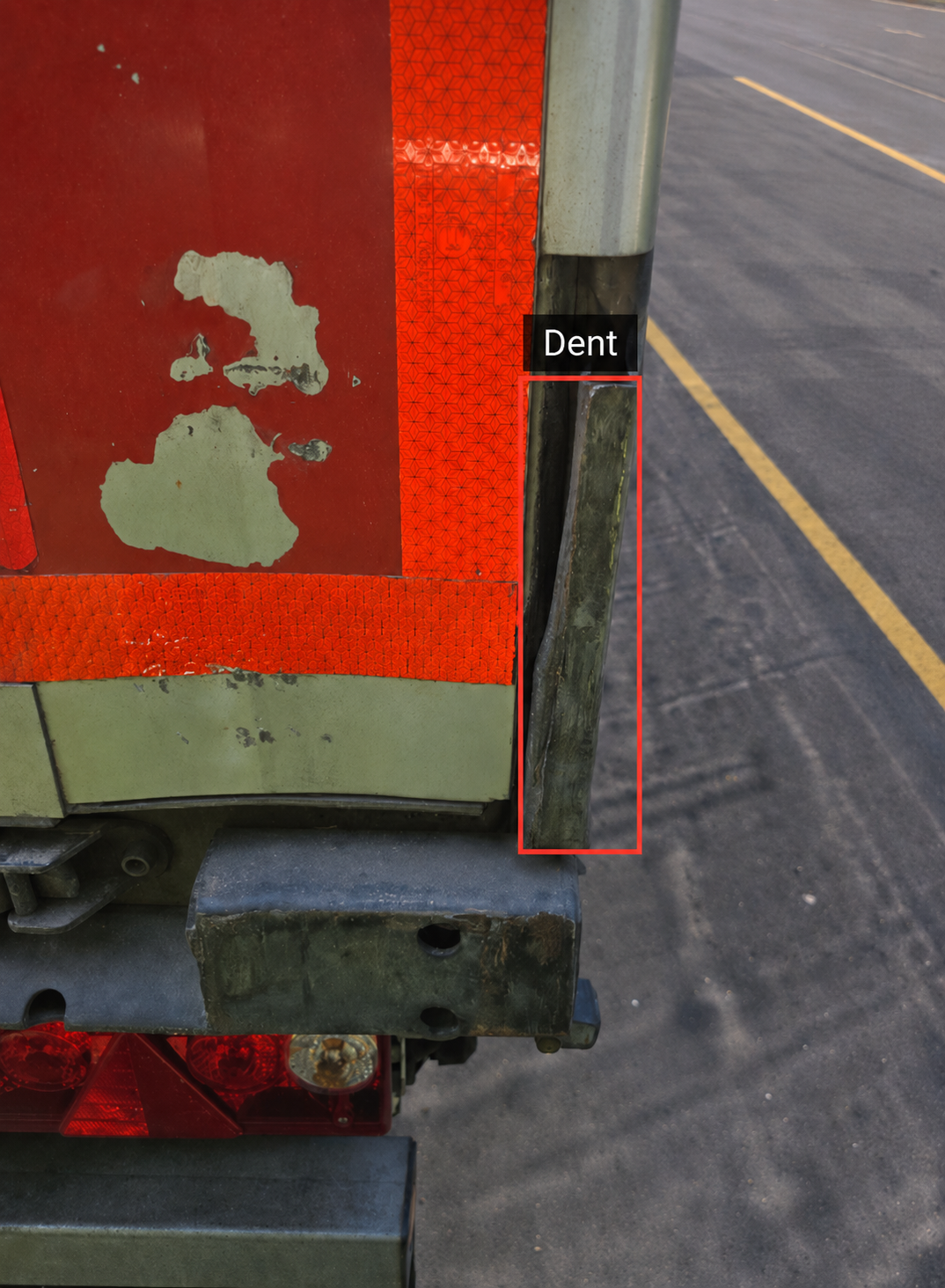
Damage of the type bent on trailers and trucks involves the deformation or misalignment of structural elements, such as frame members, support beams, or chassis components. This can occur in collisions or accidents where the force applied causes bending rather than tearing.
Damage of the type dented refers to localized depressions or deformations in the vehicle's surface. Dents can be caused by impacts with objects or other vehicles, resulting in concave or convex impressions on the affected areas, such as the truck's body panels or the trailer's exterior. Dented damage is typically less severe than torn or bent damage but may still necessitate repairs for aesthetic and functional reasons.
Since the both bent and dent are very similar in their nature, we treat them as one single damage category.
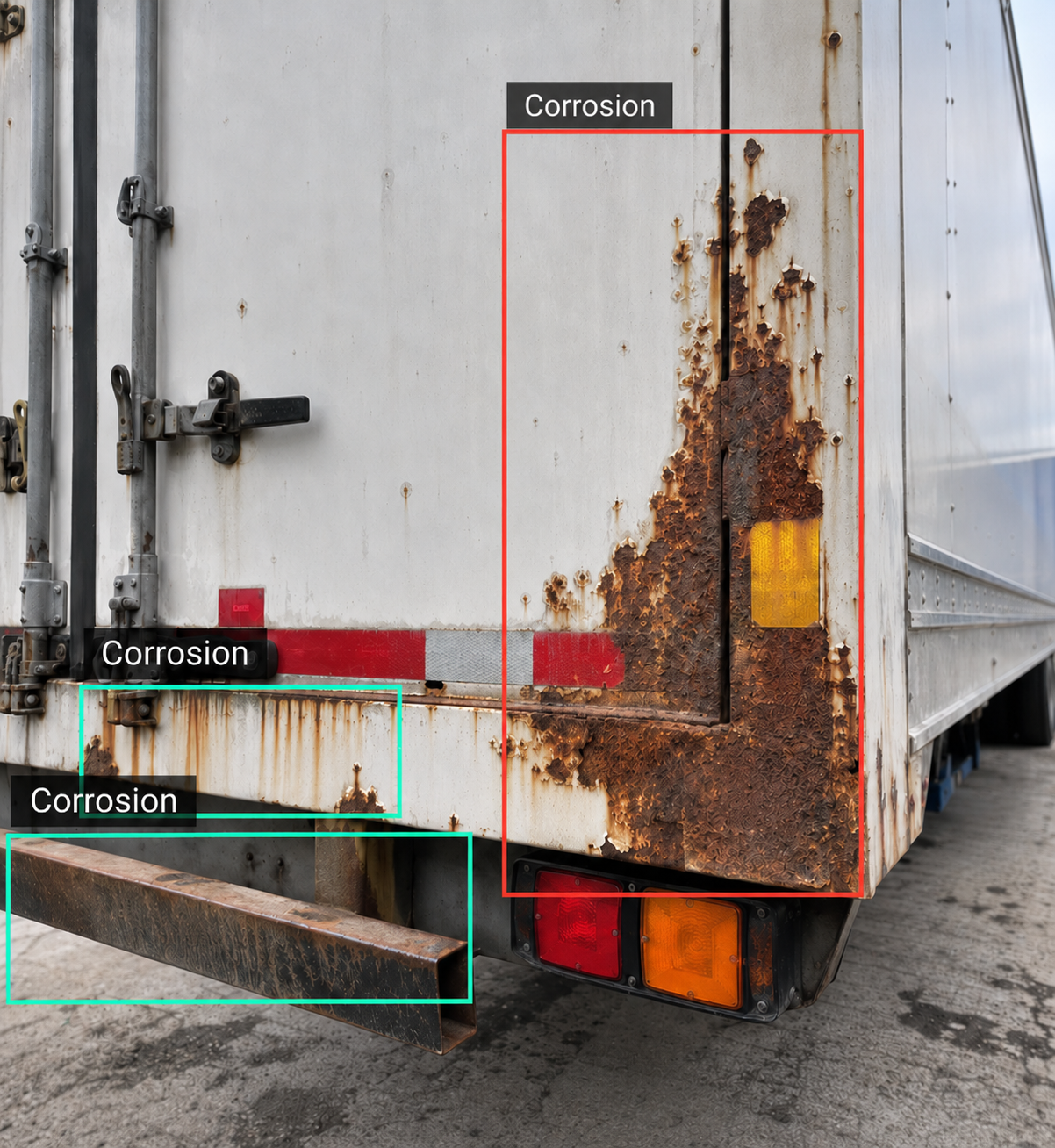
Corrosion and rust damage on trailers and trucks typically manifest as the gradual deterioration of metal surfaces due to exposure to environmental elements. Corrosion often appears as a general breakdown of the metal structure, leading to pitting, discoloration, and a weakened overall integrity.
Rust, a specific form of corrosion on iron or steel, results in the formation of reddish-brown flakes or coatings on the affected areas. Over time, both corrosion and rust can compromise the structural strength of trailers and trucks, potentially leading to safety concerns and necessitating repair or maintenance to prevent further deterioration.
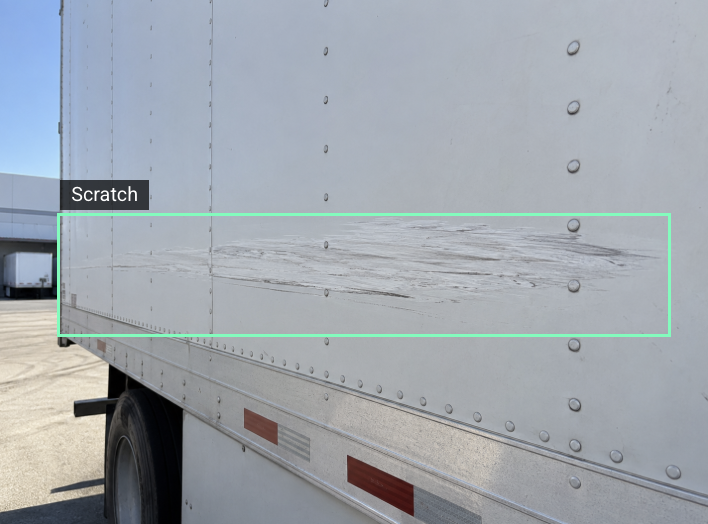
It is a common vehicle damage type. A scratch is a narrow surface mark caused by friction or contact with another object, affecting the paint, coating, or underlying material. Scratches can result from branches, loading equipment, tools, other vehicles, or improper handling.
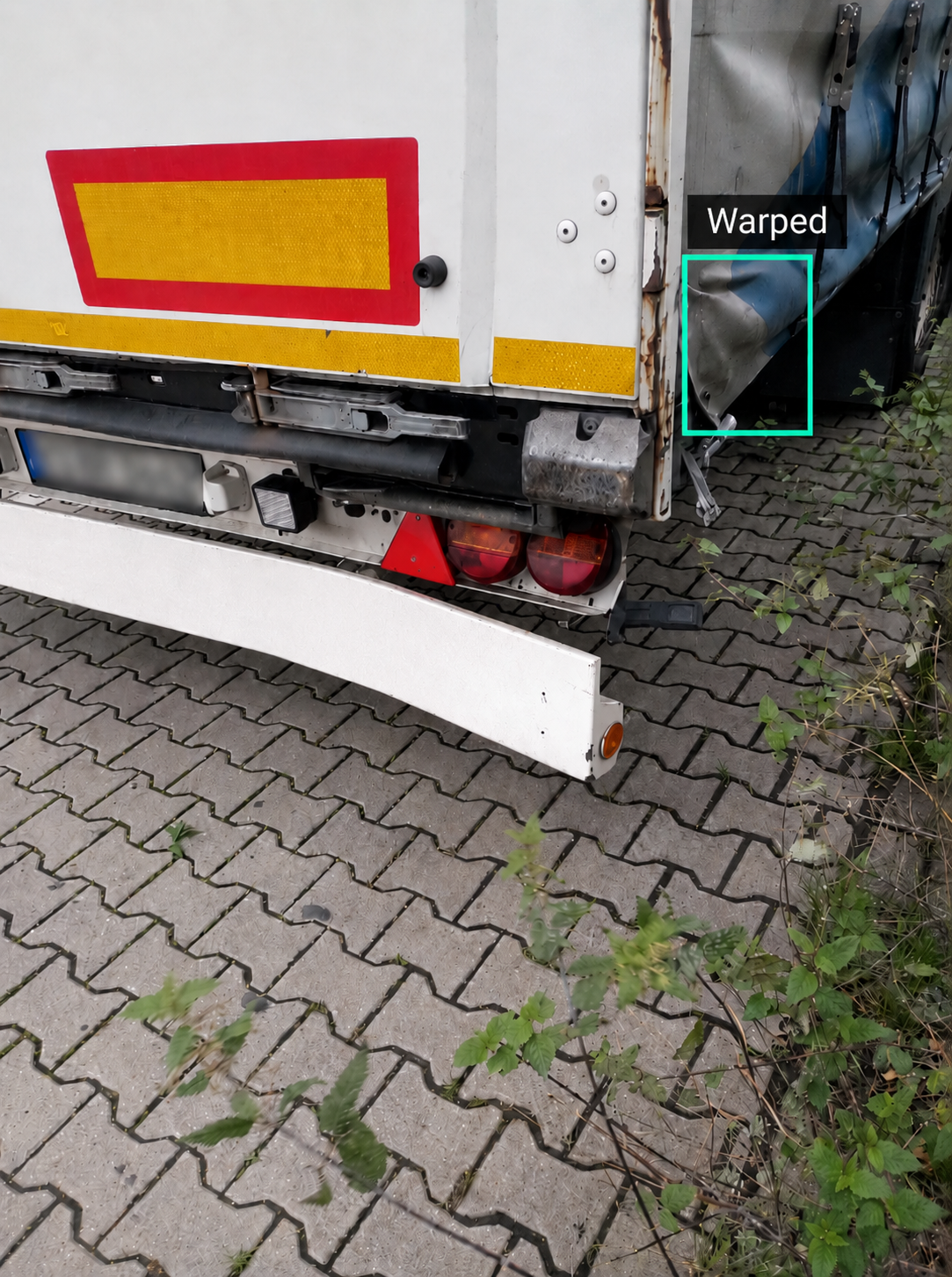
It is a less common damage type. A warped surface refers to a surface that deviates from being perfectly flat or smooth, often exhibiting irregularities or distortions. Warping can occur due to various factors such as temperature changes, moisture absorption, mechanical stress, or manufacturing defects.
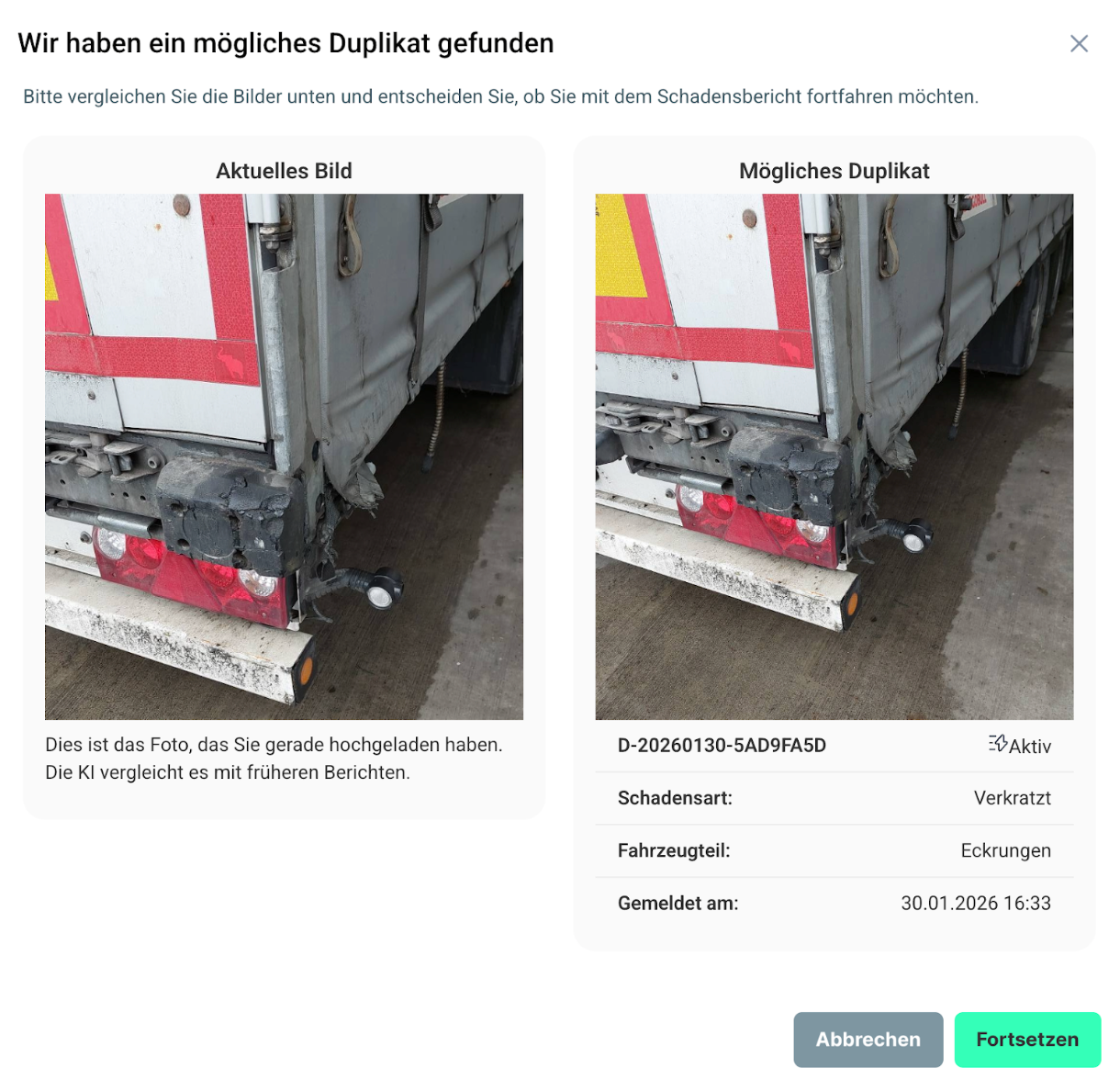
The Damage Duplicate Detection feature helps prevent the same vehicle damage from being reported multiple times. When a driver submits a new damage report, the uploaded photo is compared with previously reported damage photos for the same vehicle. If an older damage meets the predefined similarity threshold, the driver is notified and asked whether to continue with the new report. The driver can then proceed or cancel the submission. This improves data quality, reduces duplicate records, and supports more reliable downstream processes such as damage tracking, repair cost estimation, and fleet reporting.
The Vehicle Part Classifier is an AI-supported service used by Checkturio to automatically identify the vehicle area or component where a reported damage is located. It supports the damage reporting workflow by suggesting the most likely vehicle part based on the uploaded inspection photo.
The model can recognize 92 most common detailed vehicle parts, enabling more precise and standardized damage documentation. Examples include components such as mudguards, doors, bumpers, body panels, and other truck or trailer parts.
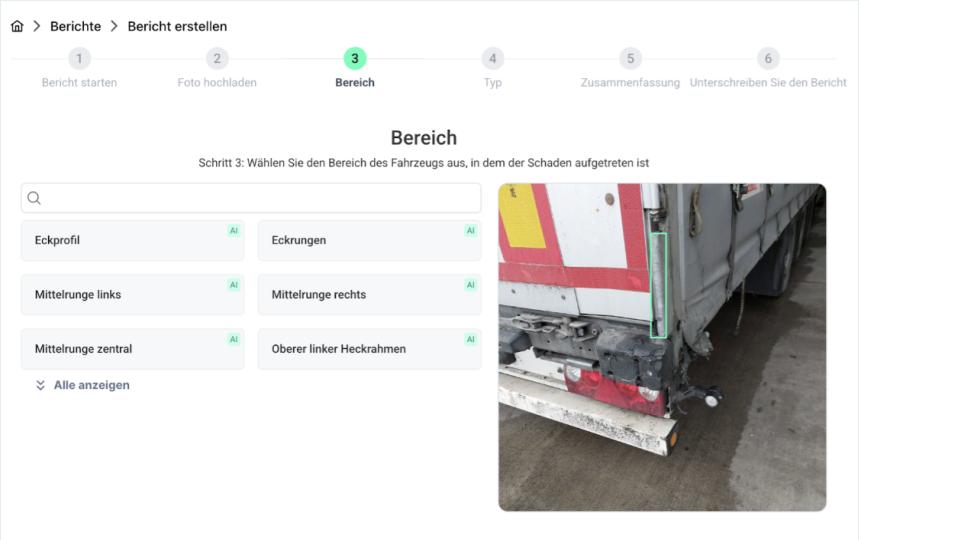
When a driver or checker uploads a damage photo, the AI analyzes the image and proposes the relevant vehicle part in real time. The suggested part is then shown in the Checkturio application as part of the damage report creation process. This reduces manual input, improves consistency across reports, and helps avoid incorrect or incomplete vehicle part selection.
Key capabilities:
The Repair Cost Estimator is a predictive analytics component that supports financial assessment of vehicle damage after the relevant damage attributes have been identified by the AI workflow. Once the system has detected the affected vehicle part and classified the damage type, the Repair Cost Estimator uses this structured information to generate a data-backed cost indication.
The service is designed to move the damage assessment process from a subjective manual estimate toward a more consistent and repeatable financial evaluation. Instead of requiring fleet managers or insurance stakeholders to rely only on individual judgement, the system provides an estimated cost range based on the detected damage context.
The estimator can support scenarios such as:
In the Checkturio workflow, the system can present a logical estimate range, for example distinguishing between repair and replacement scenarios. This gives fleet managers, service partners, and insurance providers flexibility while still grounding the decision in structured AI output and historical data patterns.
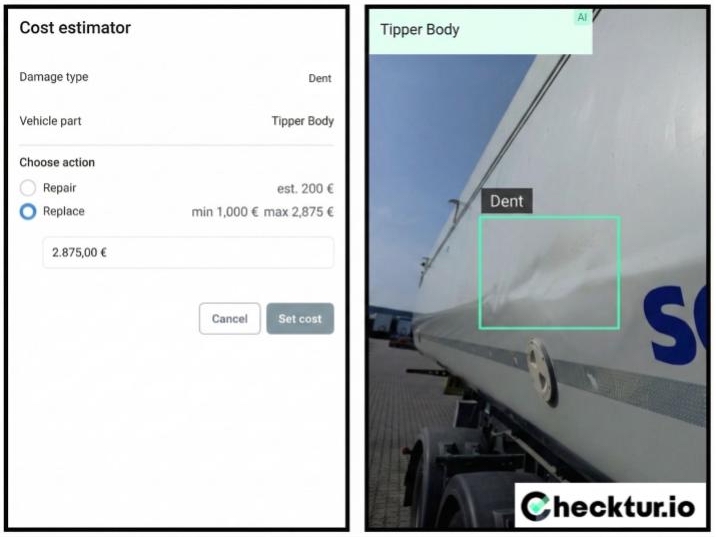
The value of this service is that it converts visual and operational damage information into an actionable financial estimate within seconds. This improves the speed and consistency of damage handling, supports better decision-making, and creates a stronger basis for downstream workflows such as repair approval, claims handling, cost tracking, and fleet reporting.
In summary, Checkturio released a more accurate damage recognition model with support for additional damage types in May 2026. Building on the AI capabilities described above, we are now refining the mobile damage-reporting experience to make the workflow faster and more intuitive for drivers. Our next steps include expanding recognition to additional vehicle and damage types and developing an AI assistant to support fleet managers in their daily workflows.
Beginne noch heute mit Checkturio! Melde dich bei uns und erfahre, wie du deine Prozesse mit uns ganz einfach optimieren kannst.


